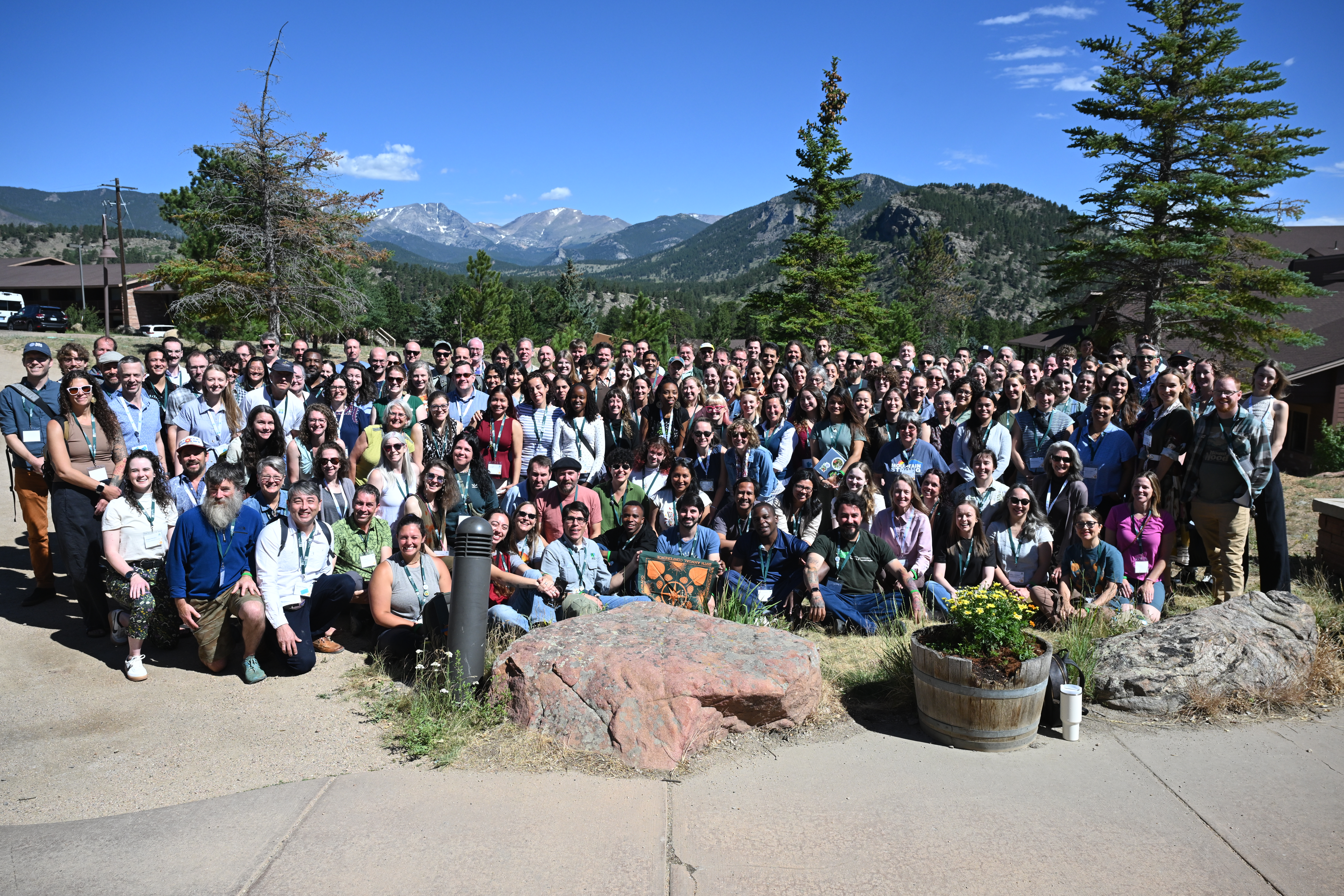
On Tuesday, July 7th, 2026, I packed up my bags at 4am to depart Northern Virginia for Denver, Colorado, and attend the Society for Conservation GIS Conference (SCGIS) at the YMCA of the Rockies, located an hour west of Boulder. I spent the week prior preparing for my presentation, planning out my agenda, and signing up for as many activities as I could. By taking the time to plan ahead, I was able to make the most of my experience networking with professionals, attending sessions that aligned with my interests, and making meaningful connections.
I’ve outlined a couple of pointers that helped me be successful and will hopefully be of use to other undergraduates in the same boat.
If your conference has an app, download it
SCGIS used an app called Whova to connect all the attendees. Whova allowed participants to network virtually, add sessions to their calendar, and receive live updates from the organizers. This app helped me stay up to date with sessions I wanted to attend and allowed me to reach out to others who shared similar interests to grab lunch or coffee.
If your conference has an app, I’d highly recommend downloading it to stay up to date with everything going on and make the most of your experience!
Read the schedule beforehand
The week preceding the SCGIS conference, I took some time to review the agenda and learn more about the various sessions offered. Like most other conferences, you can’t attend everything. Sessions are grouped by common subjects such as Habitat Modeling & Mapping, GIS for Policy and Priorities, and Conservation Apps & Tools, just to name a few. Because multiple groups of sessions are held at the same time, I had to pick and choose what I wanted to attend. Since my research is centered more around remote sensing technologies and the programming side of GIS, I focused on sessions that incorporated more technical elements or offered training on new tools.
My big tip here would be to add the sessions that interest you most to your calendar. SCGIS made use of the app Whova, which let me easily add sessions I was interested in straight to my calendar. Deciding what I wanted to attend beforehand helped me get the most out of the experience and spend time listening to speakers whose work resonated most with my interests.
Don’t be afraid to ask questions
As an undergrad, I definitely came in pretty scared, especially about chatting with professionals who have years of experience in their field. Some presentations also covered topics I was less familiar with or areas my undergraduate courses hadn’t touched on. Thankfully, everyone was always more than happy to answer questions related to their presentations or areas of interest. And when I didn’t feel like asking a question in front of everyone during panels or keynotes, there was always plenty of time later to chat at networking sessions. You can always reach out via email or LinkedIn after the conference and schedule a time to talk.
Be prepared to network
A key part of my conference experience was having the opportunity to network with other passionate individuals. Coffee breaks and meal blocks were great times to meet others, but there were also more dedicated networking sessions. During the map gallery and silent auction nights, much of the time was spent chatting and making connections with professionals and other students attending the conference. At these events, some companies (ESRI, GeoMarvel, etc.) even had tables set up to chat with recruiters and professionals.
A key part of networking for me was locking in a quick one-to-two-minute introduction, what recruiters would call an elevator pitch. I mainly focused on my education, my degree, the research I was presenting, the tools I use frequently, and my general interests. This made introductions super easy and got the conversation rolling.
Practice your presentation
If you have a time slot, or are part of a curated session where you’ll be presenting your research, this is the best time to make a positive impression on future employers and really showcase your technical skills.
I was fortunate to present some of my research during a curated session for my university’s research lab, which one of my professors helped set up. I ran through my presentation multiple times beforehand to make sure I’d stay within my allotted time, convey the research elements that mattered most, and cut down on pausing or long “umms” while presenting.
Practicing your presentation is crucial to its success and to standing out to those who come watch it. You never know — your future employer could be listening in. I’d try to get some laughs from the audience and have fun with it to ease any stress you might be feeling. I threw in a few jokes about map projections and some rookie mistakes I made along the way.
Have some fun!
While most of the conference was spent learning and networking, there was plenty of time to hang out and have fun! I had a wonderful time hiking the local trails and grabbing dinner in Estes Park, just down the road from the conference.
Organizing fun outings with alumni and fellow students attending from my university was a great way to explore Colorado and enjoy some time off from the standard conference activities.
Additionally, SCGIS offered a bunch of fun activities, such as photographing the Milky Way at night or joining bird walks on the trails around the YMCA of the Rockies. Both of these involved either staying up late or waking up super early, so unfortunately, I didn’t make it to either.
Conclusion
I had a wonderful experience at my first research conference and definitely want to attend SCGIS again in the future. The connections I made and the new skills I gained along the way will benefit me greatly as I head into my senior year of college and, down the line, as a young professional.
Participating in research has been a highlight of my undergraduate experience at William & Mary. I’m incredibly fortunate to have mentors like Professor Rose and Professor Lohani at the IIC, who have continuously supported me and helped me grow my professional, analytical, and interpersonal skills. This research also wouldn’t have been possible without the amazing students who collaborated alongside me. [names] all contributed to the results and initial assessment of algal blooms we were able to achieve.